





How to Wake Up Tired Eyes
|
|
Time to read: 3 min
|
|
Time to read: 3 min
IN THIS ARTICLE
As we age, there’s often a moment when the face looking back at us in the mirror feels slightly unfamiliar. You’re taking care of yourself. You’re getting sleep when you can, drinking water, following the routines that have always worked. And yet, somehow, your makeup isn’t.
The concealer you’ve relied on for years may suddenly seem to settle into fine lines, crease by midday, or leave your under-eyes looking drier and more tired than before. It’s easy to assume you’re doing something wrong, but the reality is much simpler: your skin has changed.
The delicate skin around the eyes naturally becomes thinner, drier, and less resilient over time. Techniques and products that once delivered a flawless finish can begin to emphasize the very things you're trying to conceal. The good news? The answer isn't more coverage or more product. In most cases, it's the opposite. The key to brighter, smoother-looking under-eyes is choosing the right formulas, applying them strategically, and embracing a less-is-more approach that works with your skin, not against it.
Read on for the undereye rules worth knowing.
The best application begins with a well-hydrated base. Think of your skin prep as the foundation for your foundation. Your favorite daytime moisturizer is a great start. It allows your base to have something smooth to adhere to, so it melts instead of settling into lines.
This is the step most of us skip when we're rushing, and it's the one that makes the most difference. Moisturizers need time to fully absorb before you layer anything on top. Apply it first, then go make your coffee, wrangle the kids, or pick out your outfit of the day. By the time you come back, your skin is ready.
Dark circles aren't just dark. They're often blue, purple, or brownish, which a standard concealer can't fully neutralize on its own. Look for a formula with built-in color correction so you're neutralizing discoloration and adding coverage in one step, without an extra product or an extra layer.
When you want more coverage, the instinct is to go heavier. But on mature skin, thick concealers sit on top instead of blending in, and by mid-morning, they've found every fine line under your eye. Start with less product than you think you need and build only where needed. For the eye area, focus on the inner corner and directly under the eye where discoloration actually lives.
If you've been applying concealer in a big, inverted triangle under your eye, you're not alone—it's been all over social media for years. But on drier, more textured skin, all that product just emphasizes what you're trying to hide. Instead, place a small amount on the back of your hand and tap in with your ring finger. Don’t swipe or rub. Your body heat does the blending.
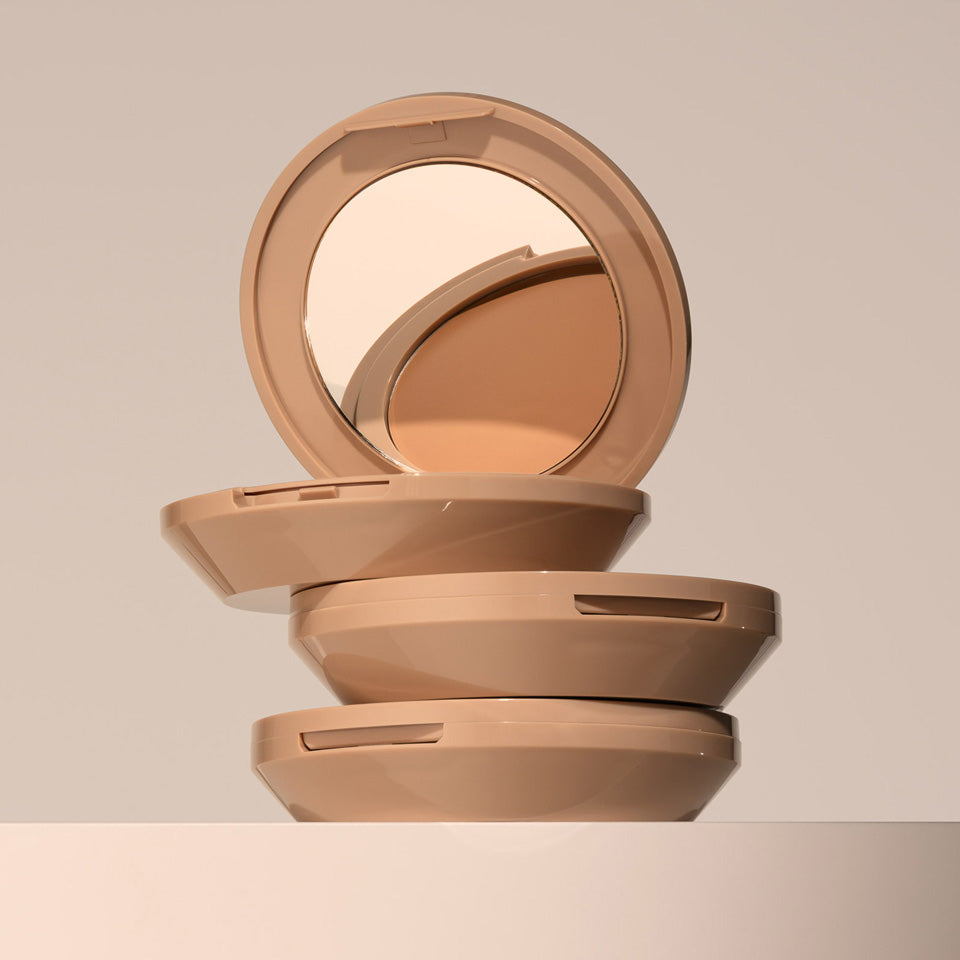
Powder products tend to settle into fine lines and can exaggerate dryness. A self-setting cream formula like this one skips all of that and lasts all day.
Why concealer starts creasing and settling into fine lines as skin matures
Makeup techniques that support a less-is-best approach for mature skin
How hydration and proper skin prep improve under-eye makeup application
Why color-correcting concealers work better for dark circles on mature skin
The problem with thick, heavy concealers and powders on textured skin
Simple dos and don’ts for brighter, smoother-looking under-eyes


